
You may not think a husky breeder would say this, but in some homes the robot dog is actually the right choice. AI companion pets run from about $170 (Joy for All comfort pups) to $499 (Loona) to $2,899 plus a ~$300/year cloud subscription (Sony Aibo). No shedding, no 6-mile runs, and no 3 a.m. howling. A real husky puppy costs $800 to $2,500 up front and demands more of your life than almost any other breed. This is a good faith comparison based on people whose business depends on you choosing right—not just choosing us.
Here’s a quick rundown of the 2026 bionic pet lineup and their needs.
There are real tiers to the robot pet market now: comfort companions like the Joy for All pup (~$170–180) made for seniors; Tombot’s Jennie (~$449+) is a hyper-realistic therapy pup with lifelike fur for dementia and clinical settings; Loona (~$499) is an expressive AI companion with conversational chat built in; Sony’s Aibo ($2,899 + subscription) develops a personality over years; and athletic platforms like Unitree’s Go2 ($1,600+) are more robot than pet.
One important warning from the fraud beat we’ve covered before: Cheap ads promising a “lifelike AI therapy puppy” for under $200 are often outright scams. Buy from the maker’s official store, and be as skeptical of too-good robot listings as you would be of too-good puppy listings. Pick any robot pet from the maker’s official store and be as skeptical of overly good robot listings as you would of overly good puppy listings. This is a good faith comparison from people whose business depends on you choosing right—not just choosing us.
Key Takeaways
Deciding between an artificial intelligence pet and a real, living animal involves weighing unique companionship needs against distinct care responsibilities.
- Real dogs provide genuine biological bonding and emotional reciprocity that machines cannot replicate.
- Robotic pets offer convenience and ease for individuals with limited mobility or restricted living spaces.
- Understanding the long-term commitment required for a living companion is essential for prospective owners.
- Maintenance for a living Husky includes nutrition, training, and exercise, whereas robotic pets rely on technical upkeep.
- Choosing between an AI companion and a real pet depends on your individual lifestyle and available energy levels.
Life cycle and daily maintenance requirements
The reality of husky puppy care
Nurturing a living dog requires constant attention to their physical, mental, and developmental growth. At Blue Eyes Husky Pups, we believe that providing a stable foundation from the start is paramount. Every puppy demands early socialization and consistent, long-term commitment to ensure they develop into balanced adults.
AI dog software updates and battery management
Robotic companionship creates a different rhythm compared to a living pet, primarily focused on hardware and digital maintenance. These units operate through complex, logic-driven systems that necessitate regular software updates to maintain interaction quality. Managing battery life involves charging cycles rather than biological feeding times, allowing owners to prioritize their schedule over immediate animal care needs.
Grooming, training, and behavioral needs
Real Huskies possess a distinct, high-energy personality defined by their desire for engagement and movement. Grooming this breed is a substantial, recurring responsibility given their dense, double-layered coats. In contrast, artificial companions require only surface-level sanitation, as they do not shed, bark uncontrollably, or require obedience training for behavioral regulation.
Emotional companionship and interaction

Biological bonding with a Husky puppy
There is an undeniable chemical and psychological depth to the connection shared with a living Siberian Husky. This relationship hinges on genuine affection and the mutual exchange of companionship that has evolved over thousands of years of canine-human history. Owners of dogs often report that the profound sense of loyalty found in this breed enriches their daily lives in ways that non-biological systems simply cannot emulate.
The limitations of programmed interactivity
Modern robotic platforms provide programmed responses, creating an illusion of interaction that fits within defined parameters. While these machines can simulate happiness or enthusiasm, they lack the true unpredictability and nuance of a living pet. The interactive limitations become apparent during deep personal moments, where the absence of a shared biological experience prevents true empathy.
Long-term therapeutic benefits of each option
Both paths offer distinct ways to enhance personal well-being depending on the owner’s environment and health profile.
| Feature | Living Siberian Husky | Robotic AI Companion |
|---|---|---|
| Emotional Reciprocity | Deep and biological | Simulated behavior |
| Physical Activity | Requires daily exercise | Stationary or light movement |
| Maintenance Cycle | High-time commitment | Tech support and charging |
| Lifespan Experience | High-impact, multi-year | Varies by hardware life |
Selecting the right path is often a balance between wanting a genuine soul-to-soul connection versus seeking a stress-free robotic dog companion that requires no training or walks.
Environmental and living constraints
Space and housing requirements for a Husky
Siberian Huskies are fundamentally built for high-speed, long-distance movement. Housing them necessitates significant indoor and outdoor space; a cramped apartment will likely struggle to accommodate the breed’s natural activity levels without substantial daily investment in external exercise. Prospective owners must ensure their home environment can support such high energy.
Indoor portability of bionic pets
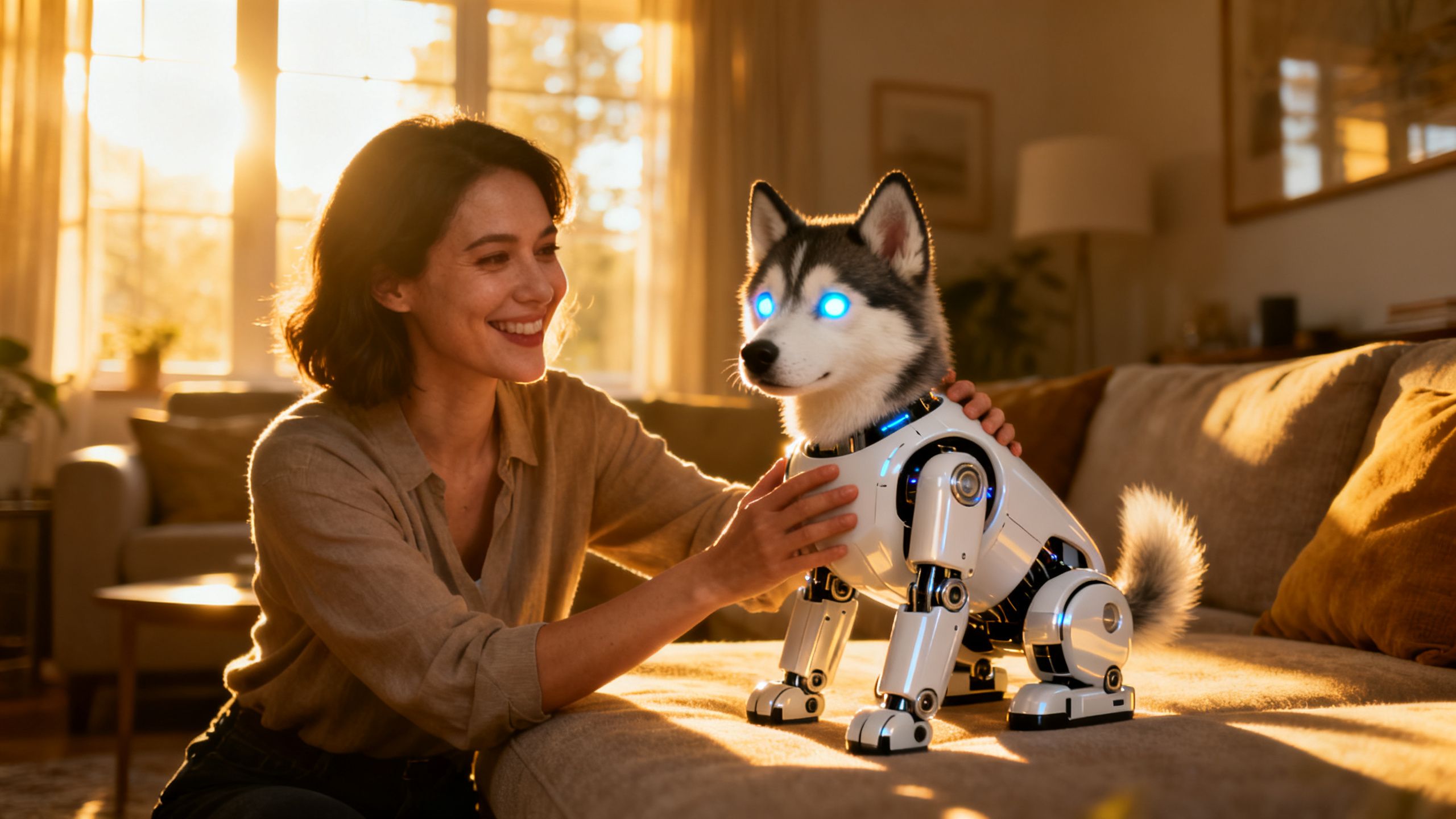
Bionic pets offer incredible flexibility regarding household constraints, making them suitable for restricted living areas. Without the need for yards or large floor areas, these machines can be enjoyed in any home, from assisted living facilities to city studios. They serve as a wonderful artificial intelligence pet for people who desire companionship without the structural demands of a large, active dog.
Impact on children and elderly household members
Understanding the physical intensity of a Husky is critical when evaluating their suitability for your home, especially for households with seniors or young children who may be easily knocked over by an excited pup. A structured approach to welcoming your new companion includes:
- Evaluating if your current home layout can accommodate safe exercise zones for a high-energy dog.
- Determining your ability to supervise play between young children and energetic, large-breed puppies.
- Assessing whether your household members require low-impact companionship that doesn’t demand physical endurance.
- Confirming that existing household safety measures protect both the family and the dog.
Careful assessment of these factors helps align expectations with the reality of living with an active, spirited Siberian Husky puppy.
Financial investment and long-term costs
Initial purchase price versus adoption fees
Acquiring a living dog involves an initial investment rooted in the quality of the breeder and lineage. Reputable breeders invest heavily in health clearances and socialization. When you choose a puppy from a dedicated breeder like Blue Eyes Husky Pups, part of the initial cost guarantees that the puppy has started its life with professional health oversight and pedigree care.
Food, veterinary care, and insurance for a real dog
Owning a real dog translates to sustained monthly expenses, including nutrition, preventative medicine, and insurance premiums for potential emergencies. Providing top-tier care is essential for long-term health, as a Siberian Husky’s fitness relies on stable weight and preventative care against common breed health issues. This long-term commitment often represents a larger financial slice than static hardware costs over time.
Hardware repairs, software subscriptions, and depreciation
Robotic companions carry different financial risks, starting with purchase price but shifting quickly toward subscription costs, proprietary software fees, and inevitable hardware depreciation. As technology advances, these devices may become obsolete faster than a living pet, necessitating a replacement cycle. While they avoid veterinary bills, the costs of high-end maintenance and technical support should be accounted for in your total, long-term budgeting plan.
Choosing the right pet for your lifestyle
Indicators that you are ready for a real Husky
If you find joy in daily, multi-mile outdoor activity and possess a patient heart for training, a real Husky might be your ideal match. Being ready means having the time, space, and energy to dedicate to a living animal for the next decade or more, prioritizing their exercise needs above your own momentary convenience.
Signs that a bionic pet suits your living situation
If your current lifestyle necessitates a quiet, predictable companion that doesn’t track mud or require hours of daily training, a bionic model might offer the best support. These pets are effective for those seeking companionship without the physical labor of yard maintenance or canine behavior training. They provide the look and sound of a pet while fitting into a busy, modern, low-mess routine.
Evaluating your daily time commitment and energy levels
Finalizing your decision requires an honest reflection on how much active play and environmental modification you are willing to undertake. Choosing between AI and real pets really comes down to your personal bandwidth for maintenance. If you choose a real Siberian Husky, you are choosing a lifelong, high-interaction member of your family who requires your active participation every day, whereas a machine exists to fit into your existing, static life.
Conclusion
Whether you welcome a living Siberian Husky into your home or opt for the technological convenience of an artificial companion, the goal remains the same: fostering a sense of joy and belonging. Real huskies provide a deep, responsive biological partner for the active adventurer, while innovative machines offer stable, low-maintenance companionship for those with space or physical limitations. By carefully considering your personal lifestyle, financial resources, and emotional goals, Blue Eyes Husky Pups believes you can make a choice that enhances your life for years to come.
Frequently Asked Questions
Is an AI dog a good substitute for a real puppy?
An AI dog serves as a companion or functional aid rather than a direct substitute, as it cannot replace the complex emotional bonding or biological engagement typical of a living pet.
How long does a robotic pet typically last?
Longevity depends on the hardware quality and software support cycles, with most high-end units remaining functional for several years before needing upgrades to stay compatible with new systems.
Does a robot dog require any physical maintenance?
While they don’t need food, exercise, or grooming, they do require cleaning, occasional software updates, battery charging, and potential repairs if internal components fail over time.
Can children interact with robot dogs as they would with a real puppy?
Children can learn responsibility and empathy through programmed interactions, though the play experience is standardized and lacks the authentic unpredictability of a living animal.
Do robot dogs help with loneliness in seniors?
Research indicates that robotic companions can provide significant comfort and reduced feelings of isolation, offering a soothing presence that is responsive to touch and voice.
What happens to a robot dog when the manufacturer stops supporting it?
When support ends, software updates cease and the device may lose connectivity, eventually becoming a non-interactive, legacy toy that no longer engages with the owner as intended.
Can you train an AI dog like a real Husky?
AI dogs behave according to preprogrammed logic loops, meaning they demonstrate programmed skills, rather than learning through the authentic, ongoing process of behavioral training required for a live dog.