
Few breeds turn heads the way a Siberian Husky does. Those pale eyes that thick wolfish coats, and the endless energy make them one of the most recognizable dogs on the planet. But before you fall in love with a fluffy puppy, there is one question every futur owners should ask: how long do Siberian Huskies live?
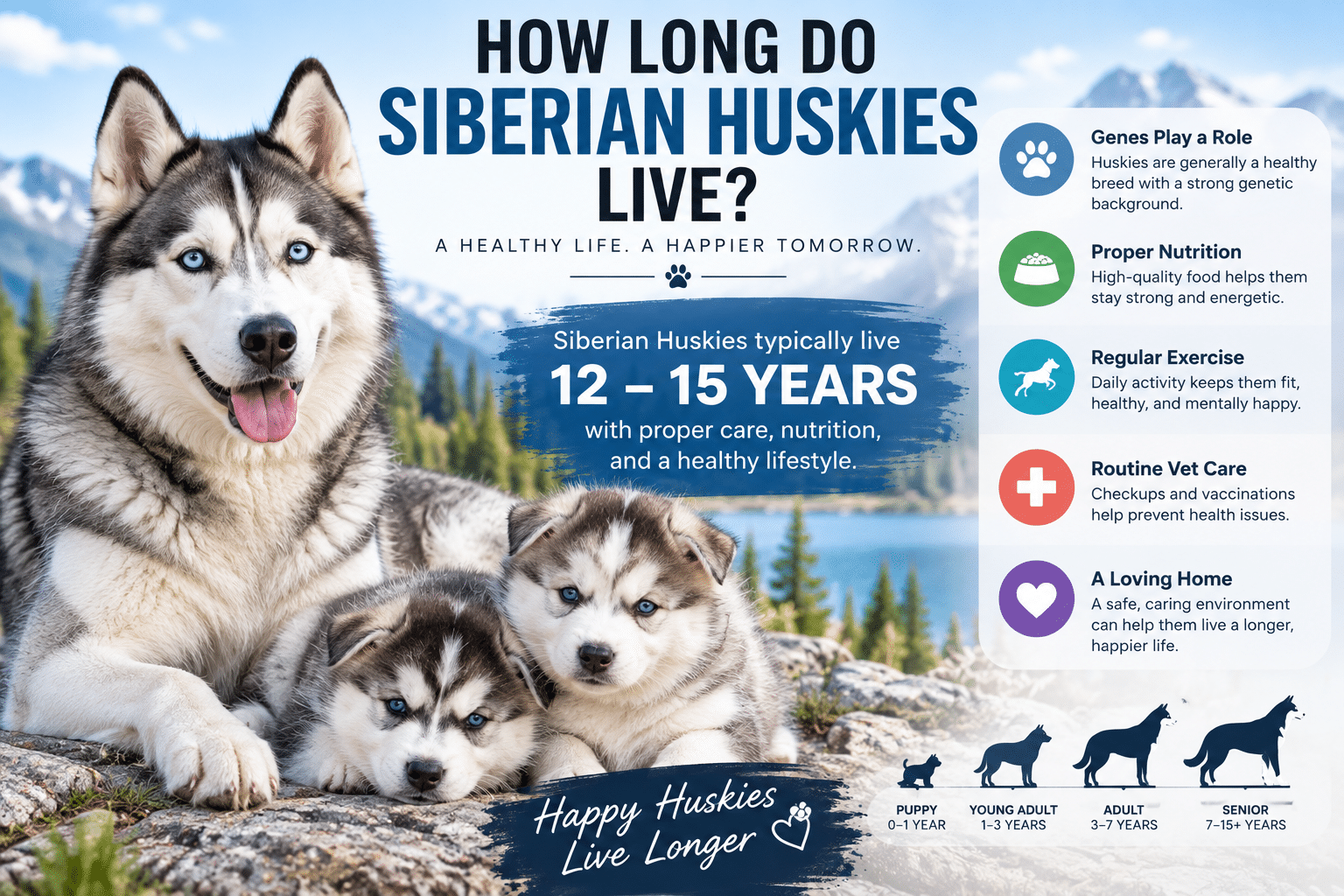
The short answer is 12 to 15 years. The longer answer is that a Husky’s lifespan depends on genetics, diet, exercise, veterinary care, and a good amount of luck. In this guide, we will walk through what the numbers really mean, what shortens or extends a Husky’s life, and what you can do to give your dog the best shot at a long, healthy run.
How Long Do Siberian Huskies Live on Average?
Most veterinary source and breed clubs put the typical Siberian Husky lifespan at 12 to 15 years. That is a strong number for a medium sized dog. Compared to giant breeds that often struggle to reach 10, Huskies are considered a fairly long lived breed.
So when peoples ask how long do Siberian Husky dogs live, the honest answer is “longer than you might expect for a dog that was bred to haul sleds across frozen tundra.” Their working origins gave them lean bodies, efficient metabolisms, and a hardy constitution, all of which contribute to longevity.
That said, averages hide a lot of variation. Some Huskies pass away at 10 due to illness or accident. Others are still hiking trails at 16. Where your dog lands on that spectrum is partly up to you.
How Long Do Siberian Huskies Live For Compare to Other Breeds?
It helps to see the breed in context. Here is a rough comparison of average lifespans:
- Siberian Husky: 12 to 15 years
- Alaskan Malamute: 10 to 14 years
- German Shepherd: 9 to 13 years
- Labrador Retriever: 11 to 13 years
- Golden Retriever: 10 to 12 years
- Border Collie: 12 to 15 years
When you look at how long do Siberian Huskies dogs live for next to similar sized working dogs, they come out near the top. The breed was shaped by centuries of selection by the Chukchi people of Siberia, who needed dogs that could survive brutal conditions on minimal food. Weak dogs simply did not make it into the gene pool. That harsh history is part of the reason modern Huskies tend to be so resilient.
How Many Years Do Female Siberian Huskies Live ?
Owners often wonder whether sex makes a difference. If you are asking how long do female Siberian Huskies live compared to males, the difference is small but real. Across many dog breeds, females live slightly longer than males, often by a few months to a year, and Huskies follow that general pattern.
Spaying and neutering also play a role. Spayed females avoid the risk of pyometra, a serious uterine infection, and have a reduced risk of mammary tumors when spayed before their first heat. Neutered males avoid testicular cancer and some prostate issues. So if you are trying to answer how long do female Siberian Huskies live in your own home, the more useful question is whether your dog is spayed, kept lean, and seen by a vet regularly. Those factors matter far more than sex alone.
For what it is worth, some of the oldest Huskies on record have been females, with a handful of documented cases reaching 17 or 18. That is not typical, but it shows the ceiling is higher than many people realize.
Factors That Affect How Long Siberian Huskies Live Longer
Understanding how long do Siberian Huskies live means understanding what shortens or lengthens that number. Here are the biggest influences.
Genetics. A puppy from health tested parents with no history of hip dysplasia, eye disease, or autoimmune disorders starts life with a real advantage. Reputable breeders screen for these conditions. Backyard breeders and puppy mills usually do not.
Weight. This is the single biggest factor you control. Huskies are built to be lean, with a visible waist and easily felt ribs. Studies across breeds consistently show that lean dogs live noticeably longer than overweight dogs, sometimes by two years or more.
Exercise. A Husky needs at least an hour or two of real exercise every day. Under exercised Huskies gain weight, develop behavioral problems, and lose muscle tone as they age. Regular running, hiking, or pulling sports keep the heart, joints, and mind in good shape.
Diet. High quality protein, appropriate fat levels, and controlled portions go a long way. Huskies do not need as many calories as their size suggests, thanks to that efficient metabolism.
Veterinary care. Annual checkups, dental cleanings, vaccinations, and parasite prevention catch problems early. Dental disease in particular is linked to heart and kidney issues in older dogs.
Safety. This one gets overlooked. Huskies are famous escape artists with a strong prey drive. A shocking number of Huskies die young not from illness but from being hit by cars after slipping a fence or a leash. Secure containment is a lifespan issue.
Common Health Problems in Siberian Huskies
Huskies are generally healthy, but a few conditions show up more often in the breed:
- Hip dysplasia. Malformed hip joints that lead to arthritis and pain. Screening parents through OFA or PennHIP reduces risk.
- Eye disorders. Juvenile cataracts, corneal dystrophy, and progressive retinal atrophy all appear in the breed. Annual eye exams by a veterinary ophthalmologist are recommended.
- Hypothyroidism. An underactive thyroid causing weight gain, lethargy, and coat problems. It is very manageable with daily medication once diagnosed.
- Zinc responsive dermatosis. Northern breeds sometimes struggle to absorb zinc, leading to skin lesions. Supplements resolve it.
- Autoimmune condition . Uveodermatologic syndrome and certain autoimmune skin diseases occur at higher rates in Huskies.
None of these are guaranteed, and most are treatable when caught early. They rarely change the overall picture of how long do Siberian Husky dogs live, but they do affect quality of life if ignored.
How to Help Your Husky Live Longer And Strong
If you want to push your dog toward the upper end of that 12 to 15 year range, focus on these habits:
- Keep your Huskies lean. If you cannot easily feel the ribs, reduce portions.
- Provide daily vigorous exercise, adjusted for age and weather.
- Feed a complete, balanced diet and avoid constant table scraps.
- Brush teeth several times a week and schedule professional cleanings.
- Stay current on vaccines, heartworm prevention, and flea and tick control.
- Build a fence that is at least six feet tall and buried or reinforced at the base.
- Never let a Husky off leash in an unsecured area, no matter how well trained.
- Keep the mind busy with training, puzzle toys, and new environments.
- Schedule senior wellness bloodwork starting around age seven.
None of this is complicated. It just requires consistency over a decade or more.
Signs Your Husky Is Getting Older
Huskies age gracefully, but you will notice changes somewhere between seven and nine years old. The muzzle grays, though on a light colored Husky it can be hard to spot. They sleep more, take longer to get up, and may lose interest in long runs. Hearing and vision often decline. Some develop stiffness in the hips or a cloudy look to the eyes.
These are normal, but they are also cues to adjust. Shorter, more frequent walks, joint supplements, orthopedic bedding, and more frequent vet visits all help a senior Husky stay comfortable.
Frequently Asked Questions
How long do Siberian huskys live?
You will often see the breed name spelled “huskys” online, and the answer is the same regardless of spelling: 12 to 15 years on average. Whether you search how long do Siberian huskys live or use the standard plural, the lifespan does not change. The spelling “huskies” is the correct one, but search engines understand both, and so do we. So if you have been typing how long do Siberian huskys live, you are in the right place.
How long do Siberian Huskies live for if they are kept indoors?
Indoor Huskies with a secure yard and daily exercise tend to live longer than dogs kept outdoors full time, mainly because they face fewer accidents, extreme weather, and parasites. Asking how long do Siberian Huskies live for as house dogs versus kennel dogs usually favors the house dog by a year or two.
How long do Siberian Husky dogs live in hot climates?
Heat itself does not shorten lifespan as long as the dog has shade, water, air conditioning, and exercise scheduled for cooler hours. Plenty of Huskies in Texas, Florida, and Arizona reach 14 or 15. Just never shave the coat, since it insulates against heat as well as cold.
Do mixed breed Huskies live longer?
Sometimes. Mixed breed dogs benefit from a wider gene pool, which can reduce inherited disease. But a Husky mix that inherits a larger frame from another breed may actually live slightly less. Lifestyle still matters more than pedigree.
Final Thoughts
So, how long do Siberian Huskies live? Twelve to fifteen years is the range you should plan for, and with good genetics and careful ownership, 16 or beyond is possible. That is a long commitment, and it is worth thinking about honestly before you bring one home.
The good news is that most of what determines a Husky’s lifespan is within your control. Keep the weight down, keep the exercise up, secure the yard, and stay on top of veterinary care. Do those things consistently, and the question of how long do Siberian Huskies live becomes less about averages and more about the many years of adventures you will get to share, for more information on husky puppies adoption or lifespan contact blue eyes husky pups .