
Key Takeaways
Puppies grow and learn more quickly and easily when they are fed at the same time every day. It also makes life at home calmer.
- You should give young puppies several small meals instead of leaving food out all day.
- Figure out how much to eat based on your age, size, activity level, and body type.
- Even if the exact minute changes try to stick to the same meal times most of the time.
- Pick a complete puppy food and talk to your vet about any special needs.
- As your puppy gets older and closer to adulthood, make small changes to the routine.
Why a Puppy Feeding Schedule Matters
Puppies are growing quickly, and their small stomachs cannot always handle a full day’s food in one sitting. A predictable puppy feeding schedule spreads calories across the day, which can help maintain energy and make bathroom breaks easier to anticipate. It also gives you a simple routine for noticing changes in appetite, digestion, or behavior.
Meals are useful beyond nutrition. A puppy learns that food arrives at dependable times, while you learn how much is actually being eaten. Consistency makes patterns easier to spot, especially during the first weeks when a new puppy is settling into your home.
Families bringing home a Siberian Husky can also benefit from breed-specific preparation, including this Husky puppy care guide, which covers nutrition alongside exercise, training, and general well-being. At Blue Eyes Husky Pups, responsible breeding includes attention to healthy, happy, and well-socialized Siberian Husky puppies, but every puppy still needs an individual feeding plan.
How Often Should You Feed a Puppy?
Most young puppies do best with three or four meals a day, depending on age, size, and veterinary guidance. Very small or especially young puppies may need more frequent meals, while an older puppy can usually move toward fewer meals. The goal is to provide enough food for growth without making one meal unnecessarily large.
A useful starting point is to divide the recommended daily amount into equal portions. The feeding guidance on a complete puppy food can help you begin, but it is not a substitute for watching your puppy’s growth and body condition. A veterinarian can help refine the amount if your puppy is unusually small, large, active, or prone to digestive trouble.
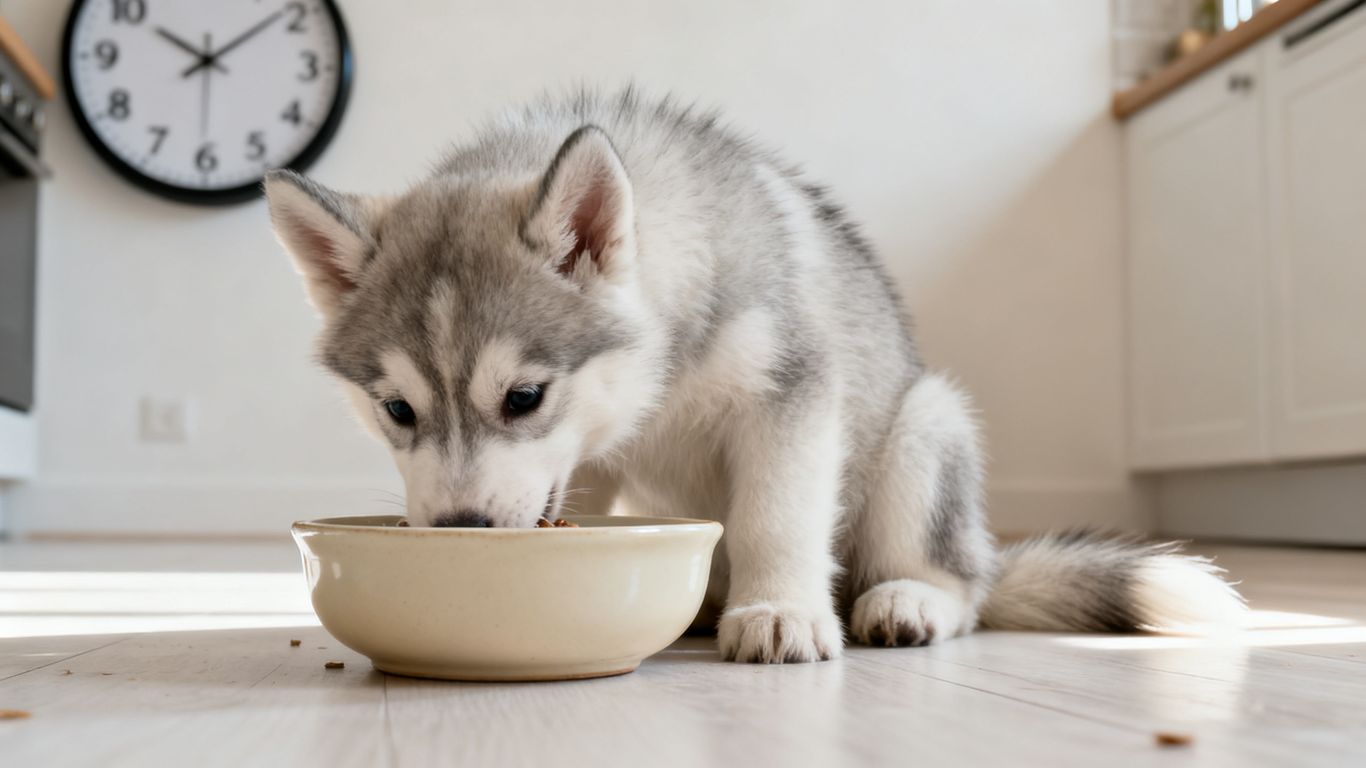
Try to keep the intervals fairly even from day to day. The general progression is often four meals for very young puppies, three meals through much of the early growth period, and two meals as adulthood approaches. For additional background on portion-controlled feeding, see these feeding methods for puppies, then adapt the routine to your own puppy rather than copying a chart blindly.
Puppy Feeding Schedule by Age
Age is one of the clearest influences on feeding frequency, but it should not be treated as the only factor. Breed size, current weight, activity, appetite, and health all affect how a puppy handles food. A growing Siberian Husky puppy may need a different plan from a toy-breed puppy of the same age.
Use the following as a practical framework rather than a rigid prescription. Puppies should be fully weaned before following a regular solid-food routine, and any puppy with poor weight gain, persistent vomiting, diarrhea, or marked lethargy needs prompt veterinary advice.
| Puppy age | Typical meals per day | Practical focus |
|---|---|---|
| About 8–12 weeks | 4 | Small portions, steady intervals, frequent bathroom breaks |
| About 3–6 months | 3 | Reassess portions as weight and activity change. |
| About 6–12 months | 2–3 | Gradually settle into a simpler routine. |
| Near adulthood | 2 | Follow breed and veterinarian guidance for transition. |
This framework works best when paired with regular weigh-ins and a quick body-condition check. The puppy feeding schedule guide offers a similar age-based structure, while your veterinarian can tell you when your individual puppy is ready to move from one stage to the next. Blue Eyes Husky Pups also provides nutrition and growth resources for families raising Siberian Husky puppies.
How Much Should a Puppy Eat?
There is no single portion that fits every puppy. Start with the food label’s daily recommendation for your puppy’s expected adult size or current weight, then divide that daily total among the scheduled meals. Treats, training rewards, wet food, and toppers count toward the day’s intake too.
Check your puppy’s shape with your hands and eyes rather than focusing only on the bowl. You should generally be able to feel the ribs beneath a light covering, see some waist from above, and notice a slight abdominal tuck from the side. A puppy that is gaining weight too quickly may need less food, while visible bones, low energy, or poor growth can signal that the plan needs review.
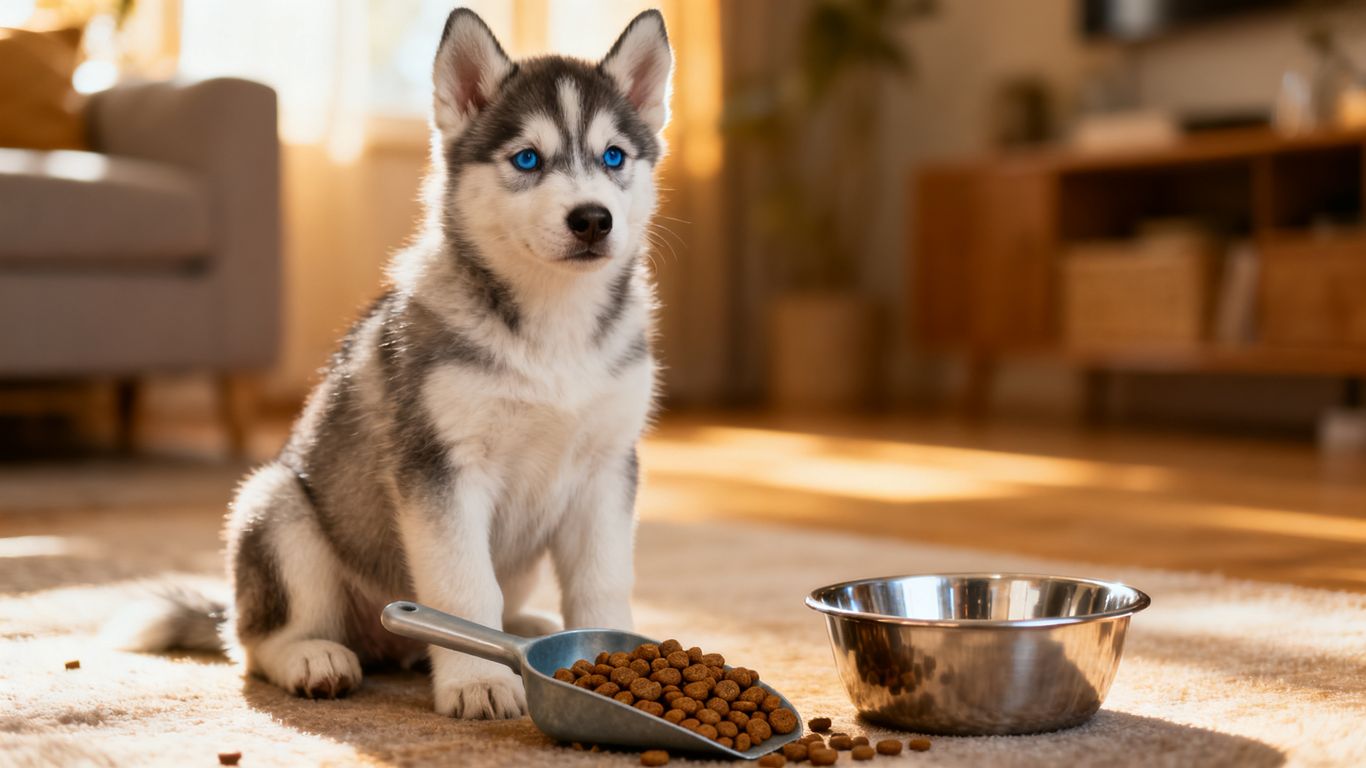
Puppies and wet food can fit into a balanced routine when the food is complete for growth and the total amount is accounted for. The same applies when you are searching for good puppy dog food: look for a formula appropriate for puppies and your dog’s size, then ask your veterinarian about any concerns. Measuring meals with a cup or kitchen scale is usually more reliable than estimating by eye.
Best Times to Feed Your Puppy
The best meal times are the ones your household can repeat most days. Breakfast after the first morning bathroom break, a midday meal, and dinner early enough for digestion and another evening potty trip can create an easy rhythm. If your puppy eats four meals, add a small late-morning or afternoon meal rather than making the existing meals much larger.
Timing also helps with training. Feeding before a predictable period of activity may leave your puppy more comfortable than feeding immediately before vigorous play. Keep fresh water available, and give your puppy a quiet place to eat without children or other pets crowding the bowl.
A simple routine can include these practical anchors:
- Offer breakfast after the first morning potty break.
- Leave enough time between meals for digestion and rest.
- Use part of a measured meal for short training sessions.
- Schedule the final meal early enough for an evening bathroom break.
The clock does not need to be perfect. If work or school shifts the schedule by a little, keep the order of meals and the total daily portion steady. That balance makes the routine useful without turning it into a source of stress.
Signs You Are Overfeeding or Underfeeding
The shape of your puppy’s body and the rate of its growth are more telling than a single look of hunger. Many puppies act hungry when they see food, even after they’ve had enough, so begging for more is not proof they need it. It can be difficult to notice changes in a young puppy from day to day, but weighing it often can help you see them.
Rapid weight gain, ribs that are difficult to feel, a rounder body, frequent loose stools, or consistently leaving food behind are all signs of overeating. Some signs that someone isn’t getting enough food are ribs or spine that can be seen clearly, low energy, not gaining weight, and being hungry all the time while having a thin body. These symptoms could be medical, so don’t try to fix a big change by adding or taking away food without first talking to a doctor.
Make a short list of your pet’s meals, treats, stools, and weight every week. If something doesn’t seem right, take it to your vet. Changes in food, parasites, illness, dental problems, or wrongly measuring portions can all have an effect on weight and appetite. The best way to treat the problem depends on what caused it.
When to Switch from Puppy Food to Adult Food
The answer depends largely on expected adult size. Small dogs may reach maturity sooner, while large and giant breeds often need puppy nutrition longer. Many dogs switch sometime between 12 and 18 months, but your veterinarian can recommend a more appropriate point based on growth, body condition, and breed.
Do not switch just because your puppy looks nearly grown. Puppy food is designed for the demands of development, and changing too early may not provide the nutritional balance your growing dog needs. On the other hand, continuing a high-calorie growth formula after maturity can contribute to excess weight in some dogs.
When it is time, transition over about a week by mixing increasing amounts of adult food with the old food. Slow down if you see vomiting, diarrhea, or a sharp appetite change. Families choosing a Siberian Husky puppy can review the breed’s nutrition and growth needs with their veterinarian, while Blue Eyes Husky Pups emphasizes responsible care and well-being for the puppies it raises.
Conclusion
A good puppy feeding schedule is steady but flexible: offer measured meals at dependable times, watch your puppy’s body condition, and adjust with veterinary guidance as growth changes. That simple attention helps turn feeding into a calm daily habit while giving you an early window into your puppy’s health.
Frequently Asked Questions
How many times a day should a puppy eat?
Most young puppies eat three or four meals daily, while older puppies commonly move toward two meals. The right schedule depends on age, size, health, and veterinary advice.
Can puppies eat wet food?
Yes, puppies can eat wet food when it is labeled as complete and balanced for growth. Include it in the daily food total and introduce changes gradually.
How do I know how much food my puppy needs?
Begin with the feeding guide for your puppy’s food, divide the daily amount into meals, and monitor weight and body condition. A veterinarian can help adjust portions.
Should I leave food out all day?
Scheduled, measured meals usually make it easier to monitor intake and establish bathroom habits. Free-feeding may also encourage overeating in some puppies.
When can a puppy eat solid food?
Puppies generally begin transitioning to solid food during weaning, often around three to four weeks, with the transition completed gradually under appropriate care.
When should I switch to adult dog food?
Many dogs switch between 12 and 18 months, but smaller dogs may mature sooner and larger dogs later. Ask your veterinarian for a breed- and growth-specific recommendation.
What should I do if my puppy skips a meal?
Remove the food after a reasonable mealtime and monitor your puppy. If skipped meals continue or occur with vomiting, diarrhea, weakness, or other symptoms, contact a veterinarian promptly.