
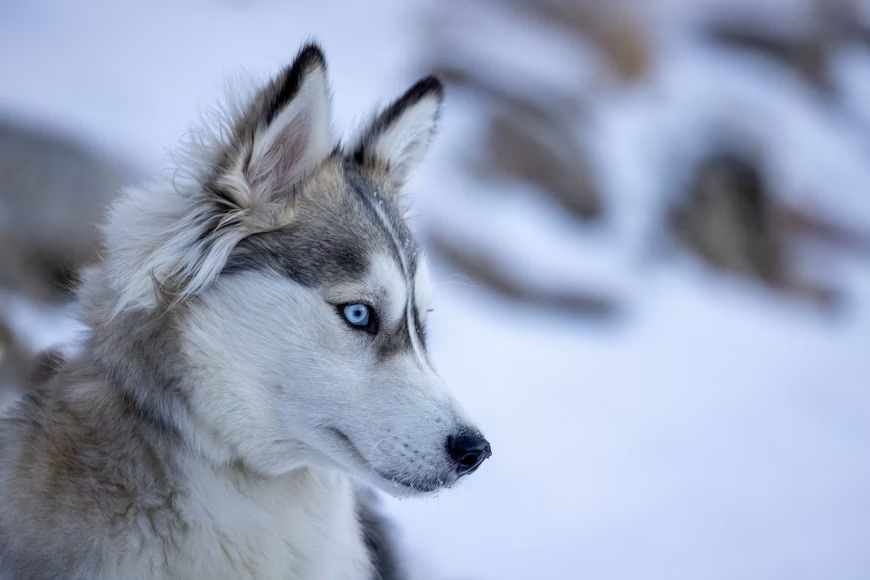
The Siberian Husky is easy to recognize and hard to forget. A thick fluffy coat, striking blue or brown eyes, a wolf like face, and the stamina of a working sled dog make this one of the most sought after breeds in America. Huskies are smart, playful, and endlessly energetic. They love to run, they love company, and they will happily join any adventure that lets them burn off steam. They are also independent thinkers who need an experienced owner, daily exercise, and a very secure yard.
If you have started searching husky puppy for sale, you already know the listings are everywhere and the quality varies wildly. This guide covers the breed’s personality, history, care needs, and cost, then walks you through where to find a healthy Husky puppy, how to tell a good breeder from a bad one, and why adoption may be the smarter choice for your family.
Quick Answer: The safest places to find a Husky puppy are breeders listed with the national breed club (SHCA), breed specific Husky rescues, and county shelters. Expect to pay $1,000 to $2,500 from a reputable breeder or $150 to $500 to adopt. Avoid pet stores and any seller who refuses an in person visit.
Husky Breed Facts at a Glance
| Trait | Detail |
|---|---|
| Size | Medium |
| Height | 20 to 24 inches |
| Weight | 35 to 60 pounds |
| Lifespan | 12 to 15 years |
| Group | Working, Northern |
| Coat | Thick double coat, heavy seasonal shedding |
| Colors | Black and white, gray and white, red and white, sable, agouti, pure white |
| Hypoallergenic | No |
| Best for | Active, experienced owners with a fenced yard |
| Good with kids | Yes, with supervision |
| Good with other dogs | Usually, with early socialization |
| Barking | Low, but very vocal with howls and “talking” |
| Trainability | Moderate, independent and easily bored |
| Exercise needs | High, 1 to 2 hours daily |
Need to Know Before You Buy
- Best suited to experienced dog owners
- Needs consistent training from day one
- Requires vigorous daily exercise, not just a walk around the block
- Sheds heavily and blows the coat twice a year
- Very vocal, howls and “talks” more than it barks
- Friendly with people but may chase cats and small animals
- Needs a tall, secure fence
- Does poorly when left alone for long stretches
- AKC registered working breed
Siberian Husky Personality
Huskies keep their working spirit no matter how comfortable their home is. They are friendly, gentle, and alert, with a stubborn streak that shows up the moment you ask them to do something they find boring. They are rarely aggressive and make poor guard dogs because they tend to greet strangers like old friends.
They are pack animals at heart. A Husky wants to be with its people or with other dogs, and one left alone in a yard all day will dig, howl, and find a way out. Their sense of humor is real. Owners often describe them as mischievous, dramatic, and surprisingly talkative.
History and Origin
The Siberian Husky was developed by the Chukchi people of northeastern Asia, who needed a dog that could pull light loads across long frozen distances on very little food. The breed reached Alaska in the early 1900s for sled racing and became famous after the 1925 serum run to Nome, when relay teams carried diphtheria antitoxin nearly 700 miles through a blizzard. The AKC recognized the breed in 1930. Today most Huskies are family companions, but the endurance, independence, and cold tolerance bred into them are still fully intact.
Ideal Owner
The right owner is active, patient, and home often. Runners, hikers, and cyclists tend to do well with the breed. So do families with a big fenced yard and time to train. A cute siberian husky puppy grows into a 45 to 60 pound athlete that needs a job, and owners who cannot provide one usually end up with a destructive, escape prone dog. First time owners can succeed, but only with realistic expectations and a training plan.
Exercise Needs
Plan on one to two hours of real exercise every day. That means running, hiking, bikejoring, canicross, or long games of fetch, not a leisurely stroll. Huskies were built to run for hours, and an under exercised Husky will find its own entertainment, usually at the expense of your furniture or fence. In hot climates, exercise early in the morning or after dark and always provide shade and water.
Space Requirements
Huskies can live in apartments if the exercise is intense and consistent, but a house with a yard is far easier. The fence should be at least six feet tall with a buried barrier or dig guard along the bottom. Huskies climb, jump, and dig with equal skill, and a four foot chain link fence is a suggestion, not a boundary.
Grooming
The double coat needs brushing two or three times a week year round and daily during shedding season in spring and fall. An undercoat rake and a slicker brush handle most of it. Never shave a Husky. The coat insulates against heat as well as cold, and shaving exposes the skin to sunburn. Baths are needed only a few times a year, since the coat naturally repels dirt. Trim nails monthly and brush teeth several times a week.
Training
Huskies are intelligent but easily bored, which makes them look stubborn. Keep sessions short, use high value treats, and end before the dog loses interest. Positive reinforcement works. Harsh correction does not. Recall is the hardest skill to build because the breed’s prey drive overrides almost everything, so most experienced owners never let a Husky off leash in an unfenced area. Enroll in a puppy class by 12 weeks and continue training through adolescence.
Suitability for Family Life
Huskies are generally excellent with children and enjoy being part of a busy household. They are boisterous, so supervise play with small kids. With other dogs they usually do well, especially when raised together. Cats, rabbits, and other small pets are a risk because of the breed’s prey drive, even after years of coexisting. Huskies do not do well as only dogs left home alone all day, so families where someone is home most of the time are the best fit.
How Much Does a Husky Puppy Cost in 2026?
- Reputable breeder, pet quality: $1,000 to $2,500
- Show or working line breeder: $2,500 to $5,000 or more
- Rescue or shelter: $150 to $500
- Classified or backyard breeder: $400 to $900
A healthy siberian husky puppy for sale from a reputable breeder sits in the $1,000 to $2,500 range. Rare coat colors and unusual eye combinations sometimes push prices higher. Do not fall for it. Color has nothing to do with health or temperament, and any breeder pricing by color instead of by health testing is telling you something about their priorities.
Where to Find a Husky Puppy for Sale
There are four main sources, and the quality gap between them is enormous.
| Source | Typical Price | Health Testing | Risk Level |
|---|---|---|---|
| Reputable breeder | $1,000 to $2,500 | Yes | Low |
| Husky rescue or shelter | $150 to $500 | Vet checked | Low |
| Online classified | $400 to $900 | Rarely | High |
| Pet store | $2,000 to $4,000 | No | Very high |
Reputable Husky Puppy Breeders
The gold standard. Good husky puppy breeders health test their breeding dogs for hip dysplasia and inherited eye disease, register litters with the AKC, and raise puppies inside the home with early socialization. They interview you, ask about your fence and your schedule, and often have a waiting list. Find them through the SHCA breeder referral list, AKC Marketplace, and regional Husky clubs. Expect to pay $1,000 to $2,500 for a pet quality siberian husky puppy for sale from a breeder like this.
Husky Rescues and Shelters
Huskies are surrendered at alarming rates, usually by owners who underestimated the exercise and containment needs. That means husky puppies for adoption show up more often than you might think, and adult Huskies are available almost everywhere. Adoption fees run $150 to $500 and typically include spay or neuter, vaccines, and a microchip. If you are searching husky puppy for sale near me, add your local Husky rescue and county shelter to the list.
Online Classified Sites
Craigslist, Facebook groups, and puppy marketplace sites are full of listings for siberian dogs for sale. Some are honest hobby breeders. Many are not. Prices tend to sit at $400 to $900, which sounds attractive until you realize the puppy likely came with no health testing, incomplete vaccines, and little socialization.
H3: Pet Stores
Avoid them. Nearly every siberian husky puppy for sale in a pet store comes from a commercial breeding operation. The puppies are often sick, poorly socialized, and marked up to $3,000 or more. Several states including California, New York, and Illinois have banned retail puppy sales for exactly this reason.
H2: How to Find a Husky Puppy for Sale Near Me
Local is better for one simple reason: you can visit. Seeing the puppies, meeting the mother, and walking through the breeder’s home tells you more than any website ever will. A siberian husky puppy for sale near me search on Google returns breeders, rescues, and scammers side by side, so you need a way to sort them.
- Search the SHCA breeder directory for your state.
- Check AKC Marketplace and filter by distance.
- Join a regional Husky Facebook group and ask for recommendations.
- Contact your nearest Husky rescue. Many have puppies in foster homes that never get listed publicly.
- Ask your veterinarian which local breeders bring in healthy puppies.
If you find a siberian husky puppy for sale near me listing that looks promising, insist on visiting before sending any money. A breeder who refuses is not a breeder you want.
H2: Red Flags When Buying a Husky Puppy
Scammers advertising siberian dogs for sale rely on buyers who are excited and in a hurry. Before you answer any husky puppy for sale ad, slow down and watch for these warning signs:
- The seller will not let you visit or see the mother
- Multiple breeds are available from the same seller
- Puppies are always available with no waiting list
- Payment is requested by wire transfer, gift card, or crypto
- The price is far below market, especially for “rare” colors
- No health testing results for the parents
- Puppies are offered before eight weeks of age
- The seller pressures you to decide today
- Photos look like stock images or appear on multiple listings
Questions to Ask Husky Puppy Breeders
- Have both parents been screened for hips (OFA or PennHIP) and eyes (OFA Eye Certification)?
- Can I see the health test results?
- How many litters do you produce per year?
- Where are the puppies raised?
- What vaccines and deworming have the puppies received?
- What does your health guarantee cover?
- Will you take the dog back at any point in its life if I cannot keep it?
Good breeders answer all of these without hesitation. Vague or defensive answers are your cue to keep looking.
FAQ.
Husky puppies for adoption are rarer than adult Huskies, but both come with real advantages. Adults are past the destructive chewing phase, often house trained, and their temperament is already known. You skip the sleepless nights and save a thousand dollars or more. Here are answers to the questions adopters ask most.
Are Huskies aggressive?
No. Huskies are one of the friendliest breeds toward people. Like any dog, one that is frightened or cornered may bite, but with normal socialization aggression is rare.
Are Huskies easy to train?
Not especially. Their independence and short attention span make them a challenge, but patience, short sessions, and positive reinforcement get results. House training works well with a consistent routine and rewards for success.
How much is a cute Siberian husky puppy from a breeder?
Between $1,000 and $2,500 from a reputable breeder. Anything under $500 should raise questions about health testing and socialization.
Are Siberian dogs for sale on Craigslist safe to buy?
Some are, most are not. Always visit in person, meet the mother, and never send money before seeing the puppy.
Where can I find husky puppies for adoption?
Start with breed specific Husky rescues in your state, then check county shelters and Petfinder. Puppies move fast, so set up alerts.
Is a Siberian husky puppy for sale near me listing safe?
Only if you can verify it. Visit the home, meet the mother, see health test paperwork, and pay in person. Any listing that blocks one of those steps is a listing to skip.
What is the difference between a Siberian Husky and an Alaskan Husky?
Siberians are a recognized purebred with a breed standard. Alaskan Huskies are a working type bred for sled racing with no fixed standard. Siberians are more consistent in appearance and temperament.
Preparing for Your New Siberian Husky
- A six foot fence with a buried barrier or dig guard
- A 42 inch crate
- High quality puppy food
- An undercoat rake for shedding season
- A harness rather than a collar, since Huskies pull
- A vet appointment booked for the first week
- A puppy training class enrolled by 12 weeks
Final Thoughts
A Siberian Husky is a stunning, loyal, endlessly entertaining dog, but only in the right home. Take your time finding a puppy. Choose a health testing breeder or a reputable rescue over a cheap classified listing. Visit in person, ask hard questions, and prepare your home before the puppy arrives. Do that, and the cute siberian husky puppy you bring home will grow into a healthy companion for the next 12 to 15 years, if you looking for lovely healthy husky puppy visit blue eyes husky pups they are the best husky breeder over 10 years .