
Key Takeaways
A Husky can be a great pet, but it takes more than just responding to the first listing that looks good to find the right puppy. Think carefully about getting daily exercise having a safe place to live, keeping health records, making friends early on, and the total cost of care.
- Make sure that your home and schedule are right for a smart, active breed.
- Before you pay, you should visit the breeder, rescue, or seller or do a lot of research on them.
- Ask for a written agreement, records from the vet, and information about the health of the parents.
- Set aside money for regular care, training, grooming, supplies, and unexpected costs.
- Choose a puppy based on how healthy it is and how it acts, not just its coat color.
Decide whether a Husky puppy is right for your home.
A Siberian Husky is athletic, social, curious, and often wonderfully funny. Those qualities also mean the breed needs steady involvement from its people, not just a yard and a bowl. Before searching for a husky puppy for sale, look honestly at your time, energy, space, and tolerance for noise and shedding.
Energy, exercise, and mental stimulation needs
Huskies were developed for demanding physical work, so a short walk around the block may not be enough as a long-term routine. A puppy needs age-appropriate activity, play, rest, and training, while an adult usually benefits from regular walks, safe running opportunities, and games that involve problem-solving. Boredom can lead to digging, chewing, vocalizing, or determined attempts to create an adventure.
Build a realistic weekday plan before you bring one home. That might include a morning walk, brief training sessions, supervised play, and an evening outing rather than one exhausting burst of activity. Daily structure matters more than occasional big adventures, especially during the puppy months.
A useful starter routine includes:
- Short, positive training sessions spread through the day.
- Sniffing walks that allow safe exploration instead of constant rushing.
- Food puzzles or simple enrichment games suited to the puppy’s age.
- Quiet crate or pen time so the puppy learns to settle.
The goal is a dog that can enjoy activity and also relax at home. If your household is rarely available, an adult dog with a known temperament may be a better match than a young puppy.
Shedding, grooming, and seasonal coat changes
Huskies have a dense double coat and typically shed noticeably, with heavier seasonal coat changes that can fill brushes, laundry, and corners of the home. Regular brushing helps remove loose hair and lets you notice skin changes early. It does not eliminate shedding, and shaving a double-coated dog is not a shortcut for managing it.
Keep a good brush, grooming towel, and pet-safe nail equipment on hand. Baths are usually occasional unless the puppy gets especially dirty, while ears, paws, and teeth deserve calm, routine checks. A household that expects a nearly hair-free sofa may find the breed frustrating.
Temperament, socialization, and training expectations
Many Huskies are affectionate and people-oriented, but they can also be independent, vocal, distractible, and eager to follow their own ideas. Their friendliness should not be mistaken for automatic obedience. Training works best when it is reward-based, consistent, brief, and interesting enough to hold the puppy’s attention.
Early socialization means carefully introducing the puppy to different people, surfaces, sounds, handling, and safe environments. It does not mean overwhelming the puppy with crowds or uncontrolled dog parks. Watch body language, offer breaks, and keep experiences positive.
Climate, housing, and escape-prevention considerations
A husky can live in many parts of the United States when its environment and routine are managed thoughtfully. In hot weather, exercise should happen during cooler periods, with shade, water, and indoor relief available. Never assume a thick coat makes heat harmless.
Secure fencing deserves special attention. Huskies may climb, dig, squeeze through weak points, or dart through an open gate. Check latches, supervise outdoor time, use identification, and avoid relying on an invisible fence as the only barrier. Apartment living can work for an active owner, but the building rules, noise level, and daily exercise plan must all be realistic.
Find reputable Husky puppies for sale.
A careful search is slower than scrolling through listings, but it gives you time to compare records, ask questions, and notice inconsistencies. Search phrases such as “husky puppy for sale near me” or “siberian husky puppy for sale near me” can help you discover options, but location alone does not establish quality. Treat every listing as an invitation to verify, not as proof that a puppy is well bred or well cared for.

Responsible breeders versus pet stores and online sellers
A responsible breeder should be willing to explain how puppies are raised, show where they live, discuss the parents, and provide veterinary documentation. You should be able to ask questions without being rushed into a deposit. A polished website, attractive photos, or phrases such as “affordable husky puppies for sale” are not substitutes for evidence.
When considering Siberian Husky puppies, look for clear information about health, socialization, and the breeder’s standards rather than focusing only on blue eyes, unusual markings, or a low price. Be cautious with anyone who promises that you can “buy cheap husky puppies” immediately without a conversation, screening, or contract.
Adoption through Husky rescues and shelters
Adoption can be a rewarding route, and not every available Husky is a puppy. Rescues and shelters may know an individual dog’s habits, energy level, training, and comfort around children or other animals. That information can make an adult dog a particularly good fit for a household that wants more predictability.
If you are searching for husky puppies for adoption, ask about age, vaccination status, sterilization requirements, behavior notes, and the return process. A rescue application is not a judgment on your family; it is a way to match the dog with a home where everyone has a fair chance to succeed.
Breed-club referrals and local recommendations
Local veterinarians, trainers, groomers, and established breed communities can sometimes point you toward responsible contacts. A recommendation is a starting point, not a guarantee, so still visit, review records, and speak with the person caring for the litter. Online community posts can be useful for leads but should not replace independent checking.
You may also encounter searches for a “Siberian dog for sale.” Confirm that the listing clearly identifies the breed, the puppy’s age, and the source of the litter. Vague breed language can hide mixes, inaccurate claims, or sellers who know little about the dogs they advertise.
Warning signs of puppy mills and unreliable listings
Some warning signs appear before you ever meet a puppy. Pressure to pay quickly, refusal to show living conditions, copied photographs, several unrelated breeds available at once, and vague health promises all deserve caution. A seller who will not answer ordinary questions is unlikely to become a helpful resource after the payment clears.
Be especially skeptical of listings built around novelty. “Brown husky puppies,” “miniature husky puppies for sale,” “mini husky puppies for sale,” and “small huskies for sale” may sound appealing, but color or size should never distract you from verifying health, adult size, breeding practices, and the puppy’s actual background.
Evaluate a breeder or rescue before committing.
Once you find a promising litter or available dog, shift from browsing to due diligence. Ask for specific answers, request documents before sending money, and pay attention to whether the person welcomes sensible questions. A caring source understands that placing a puppy is a two-way decision.
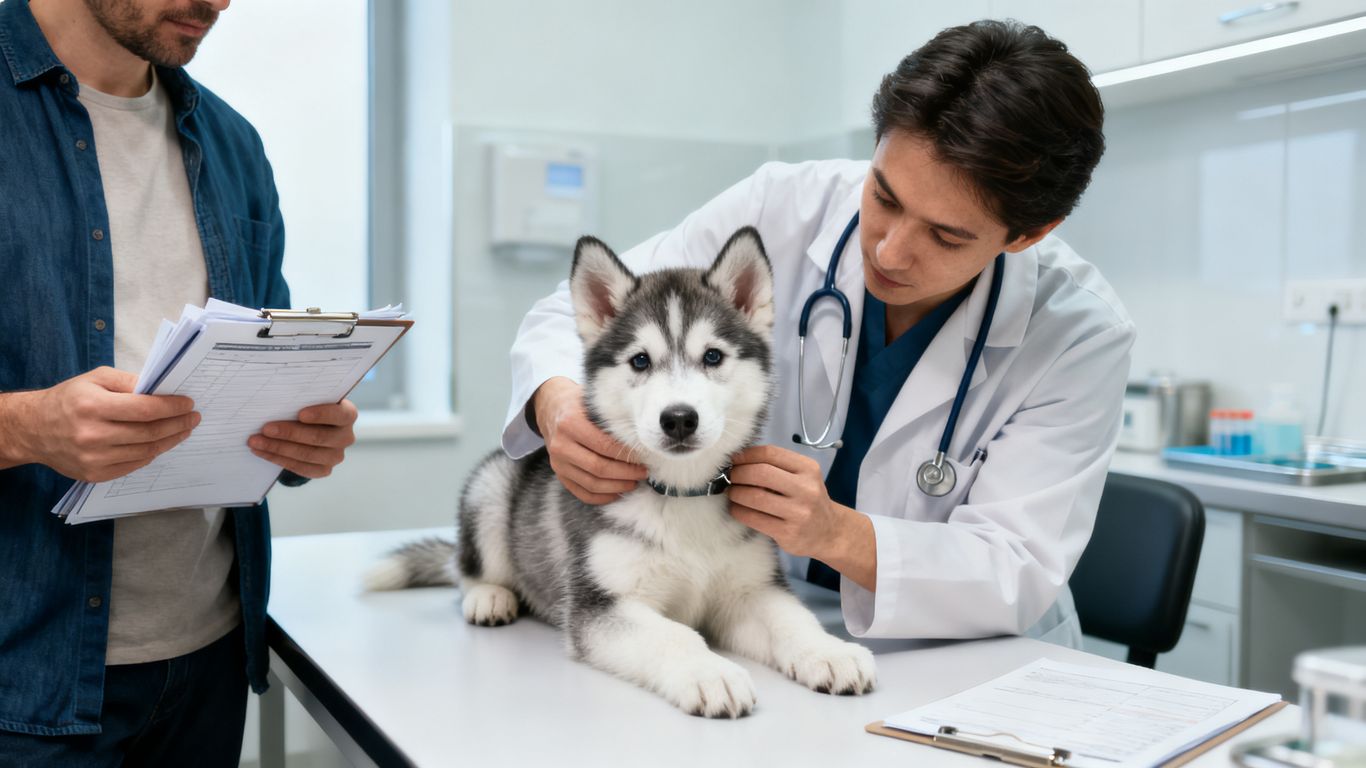
Questions about the puppy’s parents and living conditions
Ask to see the mother and, when possible, learn about the father’s health and temperament. The parents’ behavior is not a perfect forecast, but it provides useful context. Ask where the litter sleeps, how often the area is cleaned, what the puppies experience each day, and whether they are raised around ordinary household activity.
If an in-person visit is not possible, request a live video call that shows the puppies, their surroundings, and the person handling them. Recorded clips can be helpful, but they do not answer follow-up questions or establish when the footage was taken.
Health testing and veterinary records to request
Request an individual veterinary record showing examinations, vaccinations or scheduled vaccinations, deworming, and any treatment provided. Ask what health screening was completed for the parents and what the seller’s written health policy covers. A health guarantee should be readable and specific, not just a reassuring phrase in an advertisement.
The records should match the puppy’s identity and date of birth. If something is missing, ask whether it will be completed before pickup or handled by your veterinarian afterward. Do not let excitement turn an unanswered health question into an assumption.
Socialization practices and early-life care
Good early care includes gentle handling, exposure to normal household sounds, appropriate play with littermates, and gradual experiences that do not frighten the puppies. Ask how the litter responds to people and what the breeder has done to prepare them for grooming, short separations, travel, and routine handling.
Socialization is not a one-time event completed by the seller. Once the puppy arrives, your household will continue the process with safe, controlled introductions and reward-based training. The first weeks should be active but not chaotic.
Contracts, return policies, and lifetime support
Read the agreement before placing a deposit. It should identify the parties, puppy, payment terms, health provisions, transfer conditions, and what happens if you can no longer keep the dog. A responsible source should prefer a safe return or rehoming conversation over having a dog quietly passed from home to home.
For buyers considering Blue Eyes Husky Pups, the Puppy Sales Agreement describes purchase terms, buyer and breeder responsibilities, health guarantees, and the return policy. Read the actual document carefully and ask questions about any provision you do not understand before signing.
Understand Husky puppy costs
The purchase price is only the first line in a much larger budget. Food, veterinary care, training, grooming tools, fencing, travel, and replacement supplies add up quickly during the first year. A lower initial fee does not necessarily make a puppy more affordable if health or behavior problems create substantial costs later.
Purchase or adoption fees
Breeder prices vary with location, lineage, health work, demand, and what is included in the placement. Rescue fees may cover some veterinary preparation and differ by organization, age, and medical needs. Ask exactly what the fee includes and whether deposits are refundable, transferable, or forfeited if your plans change.
Avoid making price the only measure of value. A transparent process with records and a clear agreement is worth more than a rushed bargain that leaves you uncertain about the puppy’s history.
Veterinary care, vaccinations, and microchipping
Plan for an early veterinary visit after pickup, even when the puppy comes with a recent examination. Your veterinarian can review the record, establish a vaccination schedule, discuss parasite prevention, check growth, and confirm the microchip information. Keep copies of every record in both paper and digital form.
Ask whether the puppy has already been microchipped and how the registration transfers to you. Also budget for routine boosters, illness visits, dental care, and sterilization if those procedures are not already included in the agreement.
Food, grooming, training, and essential supplies
The first-year budget is easier to understand when recurring and one-time expenses are separated. The following overview is not a quote; local prices and your puppy’s needs will vary.
| Expense area | What to plan for | Why it matters |
|---|---|---|
| Food | Puppy-appropriate diet and treats | Growth and activity affect portions. |
| Training | Classes, private help, or enrichment | Consistency supports safety and manners. |
| Grooming | Brushes, nail care, and occasional professional help | Dense coats need regular maintenance. |
| Supplies | Crate, collar, leash, bowls, bedding, and gates | Safe routines require practical equipment |
Use the table as a checklist for building a monthly estimate, not as permission to cut corners. A dependable leash, secure crate, and suitable food may prevent problems that cost more to fix later.
Long-term costs and emergency expenses
A Husky may be part of your family for many years, so consider annual food, routine veterinary care, parasite prevention, training refreshers, boarding, and replacement equipment. Secure fencing and property repairs can also become meaningful expenses for an energetic escape artist. Emergency savings or pet insurance may soften the effect of an unexpected illness or injury.
A realistic budget makes ownership less stressful. It also helps you decide whether now is the right time to buy a puppy or whether waiting would allow you to prepare more responsibly.
Choose a healthy and well-matched puppy.
The right puppy is not necessarily the one with the most striking eyes or the coat color you first imagined. Health, stable behavior, appropriate development, and a good match for your household matter more than a photograph. Take time to observe the litter rather than choosing from a seller’s favorite description.

Physical signs of good health
A healthy puppy is generally alert, comfortable moving around, and interested in its surroundings without appearing constantly distressed. Look for clear eyes, clean ears, a coat without obvious bald patches, normal breathing, and a body condition appropriate for its age. The puppy should not have persistent coughing, diarrhea, extreme lethargy, or discharge that the seller dismisses without explanation.
No brief visual check replaces a veterinary examination. Ask what you are seeing, compare the puppy with littermates, and make sure any concern is recorded and addressed before the transfer.
Appropriate age for going home
Puppies need time with their mother and littermates to develop social skills, bite inhibition, and confidence. The seller should state the birth date and explain the planned go-home date. Be wary of anyone eager to send a very young puppy away simply because a buyer is ready.
The exact timing can depend on health, development, legal requirements, and the agreement, so confirm the details with your veterinarian and local authorities. A little patience at this stage supports a smoother transition.
Personality traits to consider
Observe whether a puppy is curious, able to recover after a mild surprise, willing to engage, and comfortable being handled gently. Some puppies are more outgoing, while others are thoughtful or sensitive. Neither is automatically better; the best choice depends on your children, pets, activity level, experience, and expectations.
Tell the breeder or rescue what daily life will look like. Someone who has watched the litter closely may help identify a puppy whose energy and confidence fit your home better than a color-based choice.
Genetic conditions and recommended health screening
Ask what screening was performed on the parents and whether the results are available for review. Discuss breed-relevant concerns with your veterinarian, including orthopedic and eye health, and ask how the breeder responds when a puppy develops a significant condition. Documentation matters more than a general statement that the line is healthy.
For a broader planning view, owners can review a Siberian Husky health guide and use it to prepare questions for their veterinarian. It should supplement professional advice, not replace an examination or a written record from the source of the puppy.
Prepare for bringing your Husky puppy home.
Preparation reduces the number of decisions you must make while the puppy is tired, nervous, or exploring every corner. Set up a quiet resting area, agree on household rules, and decide who handles feeding, potty breaks, supervision, and nighttime care. The first several days should be calm enough for the puppy to learn that home is safe.
Puppy-proofing your home and yard
Get down to the puppy’s eye level and look for cords, small objects, toxic plants, open vents, unstable furniture, and gaps behind appliances. Use gates where supervision is difficult and store food, medicines, cleaning products, and laundry securely. Outside, inspect fence lines, gate latches, digging spots, and spaces under decks.
Supervision is still necessary after puppy-proofing. Young Huskies are inventive, and a safe setup can change as the puppy grows taller, stronger, and more confident.
Essential supplies for the first week
Choose equipment for safety and growth rather than appearance. You will need a properly sized crate or pen, washable bedding, food and water bowls, a collar with identification, a secure leash, chew items, waste bags, cleaning supplies, and grooming tools. Keep a few meals of the current food available so a sudden diet change does not add unnecessary stomach upset.
Ask the seller or rescuer for familiar food, feeding instructions, medical records, and a blanket or toy carrying a familiar scent if available. Small continuity cues can make the first night easier.
Feeding schedule and house-training routine
Feed on a consistent schedule recommended for the puppy’s age, size, and diet, and keep fresh water available as appropriate for your veterinarian’s advice. Take the puppy out after waking, eating, drinking, playing, and napping. Quiet praise immediately after elimination helps the puppy connect the behavior with the reward.
Accidents are part of early learning, not a reason for punishment. Clean thoroughly, supervise closely, and keep a simple note of meals, water, naps, and bathroom trips until the pattern becomes predictable.
Safe introductions to people, pets, and new environments
Introduce new experiences gradually and protect the puppy from overwhelming attention. Let the puppy approach visitors, provide a retreat, and supervise every interaction with children. Resident pets should meet in a controlled setting, with separate food, rest areas, and escape routes until you understand how they respond to one another.
Ask your veterinarian about local disease risks before taking the puppy into heavily trafficked dog areas. Socialization can include car rides, household sounds, calm visits, and clean surfaces while you follow appropriate health precautions.
Complete the purchase or adoption responsibly.
The final step is more than exchanging money and taking a puppy home. Confirm the identity of the puppy, collect the records, understand the agreement, and leave with a practical care plan. A careful handoff protects both the family and the animal.
Reviewing the agreement and required documentation
Before signing, check the puppy’s name or identification, date of birth, payment balance, health terms, return policy, and any sterilization or breeding provisions. Collect vaccination and deworming records, microchip information, veterinary notes, feeding instructions, and contact details for follow-up questions.
If you are working with Blue Eyes Husky Pups, review the written agreement and supporting documents line by line rather than relying on a verbal summary. Clear paperwork is useful long after the excitement of pickup has passed.
Arranging transportation and pickup safely
Whenever possible, meet the puppy in person and see where it has been raised. If travel is necessary, confirm who is transporting the puppy, how breaks and temperature will be managed, and what records travel with it. Never send money to an unverified recipient because a listing claims that only one puppy remains.
For longer-distance arrangements, ask for a written itinerary and an emergency contact. The puppy should arrive with a secure carrier, water plan, and enough information for the receiving veterinarian.
Scheduling the first veterinary appointment
Book the first appointment before pickup or as soon as the transfer is confirmed. Bring every record, note the puppy’s diet and behavior, and ask about vaccines, parasites, nutrition, exercise, and safe socialization. Your veterinarian can also scan the microchip and help you establish a preventive-care calendar.
Do not wait for obvious illness before seeking advice. A prompt baseline visit gives you a clearer picture of the puppy’s health and a chance to address small concerns early.
Planning training, identification, and ongoing care
Start with the puppy’s name, gentle handling, recall foundations, loose-leash habits, and calm settling. Use identification on the collar and register the microchip with current contact information. A reliable routine will matter more than trying to teach every skill in the first week.
For practical guidance after the move, the Husky puppy care guide from Blue Eyes Husky Pups covers care, training, nutrition, socialization, and common health concerns. Keep learning as your puppy grows, and ask qualified professionals for help when behavior or health questions become difficult.
Conclusion
Finding a Husky puppy should be a thoughtful process, not a race to claim the most appealing listing. When you match the breed’s needs with your household, verify health and care practices, prepare your home, and budget honestly, you give your new companion a much stronger start.
Frequently Asked Questions
Are Huskies good family dogs?
They can be affectionate and engaging family companions when they receive enough exercise, supervision, training, and socialization. Their energy, vocal nature, and prey drive still require thoughtful management, especially with young children or smaller pets.
How much exercise does a Husky puppy need?
Puppies need several brief, age-appropriate activity periods balanced with plenty of sleep. Avoid forced running and repetitive high-impact exercise while the puppy is growing, and ask your veterinarian how to increase activity safely.
What should I ask before buying a Husky puppy?
Ask about the parents, living conditions, birth date, veterinary care, vaccinations, parasite treatment, microchip, health screening, socialization, contract, return policy, and what support is available after pickup.
Is adoption a good option for someone seeking a Husky?
Yes. Rescues and shelters may have puppies, adolescents, adults, or mixes, and they can sometimes provide useful information about temperament and training. The best choice depends on the dog’s needs and your household’s experience.
How can I spot an unreliable puppy listing?
Be cautious when a seller pressures you to pay quickly, refuses a visit or live video call, cannot provide records, uses copied photos, offers many breeds without clear details, or avoids written terms.
What should a new Husky owner budget for?
Plan for the initial fee, veterinary visits, vaccinations, microchipping, food, training, grooming supplies, secure equipment, boarding or care during travel, and emergency treatment. Costs vary by location and the dog’s individual needs.
When should a Husky puppy see a veterinarian?
Arrange a first examination soon after bringing the puppy home, following the timing required by your agreement and local rules. Bring all records so the veterinarian can confirm the care already provided and plan the next steps.